
Chapter 6
What the living can do
Much of the death-section turns from the traveller to the living — what the family is told to do after a death
The offerings
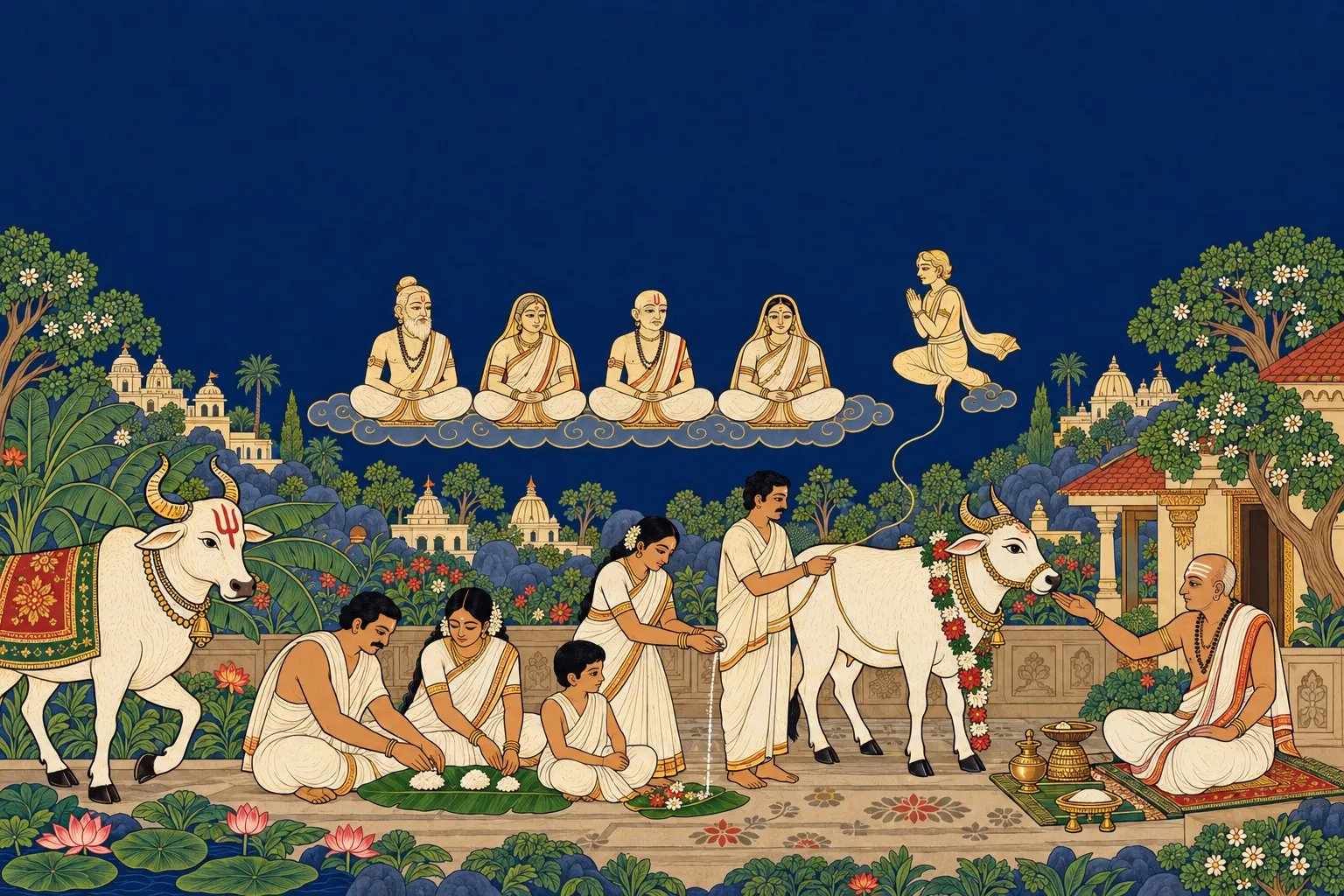
Within the death-section, the Garuda Purana spends more time on the living than on the dead — on what a family does with its hands in the days after a loss.
The pindas, first: the rice and water of the first ten days, which the text says feed the one who has gone while his new body is forming.
Then the shraddha — the rite of shraddha, "faith" — in its two forms: one for the person newly dead, one for the line of ancestors they are about to join.
Then the gifts: food, sesame, water, cloth, and above all the ritual gift of a cow to a worthy recipient, which the text says carries the dead across the Vaitarani.
The joining
On the twelfth day — this text's preferred timing — comes sapindikarana: the offering for the newly dead is merged with the offerings for the ancestors, and by that act the dead joins the line of the pitris.
From that day the family owes him something different. Not the sharp work of grief — the long work of remembering. The yearly shraddha on the death tithi, the lunar date of the death. The fortnight of Pitri-Paksha each year, when the whole line is fed at once.
The chapter moves the way the mourning is meant to: from doing something for the dead, to carrying them.
Who does it
By tradition the rites fall to the son, and the text is written with that assumption, and with assumptions about lineage and birth that belong to its time.
Later and modern practice varies widely: depending on community and circumstance, other relatives — daughters and the women of the family among them — may also perform the rites.
The instruction under the instruction is the part that travels: someone must do the remembering, and the doing is itself the point.
Note: The Garuda Purana devotes far more space to funerary and mourning ritual than to the afterlife journey. Core elements: the ten days of pinda offerings; individual preta-shraddha and ancestral shraddha; and sapindikarana, whose defining act is the ritual merging of the newly dead person's offering with those of the ancestors — this recension prefers the twelfth day while acknowledging later timings. Also the vaitarani cow-gift (godana), and vrishotsarga, the release of a bull in the deceased's name, to which the text attaches particular importance. After sapindikarana the deceased is honoured through the annual shraddha and the yearly Pitri-Paksha fortnight. Eligibility to perform the rites traditionally falls to the son, with historical assumptions about lineage, caste and gender; later and modern practice has broadened this considerably.
Source: the Preta-Kalpa of the Garuda Purana (with the Vedic and Upanishadic accounts for contrast), What the living can do