
Chapter 5
Six Krittikas
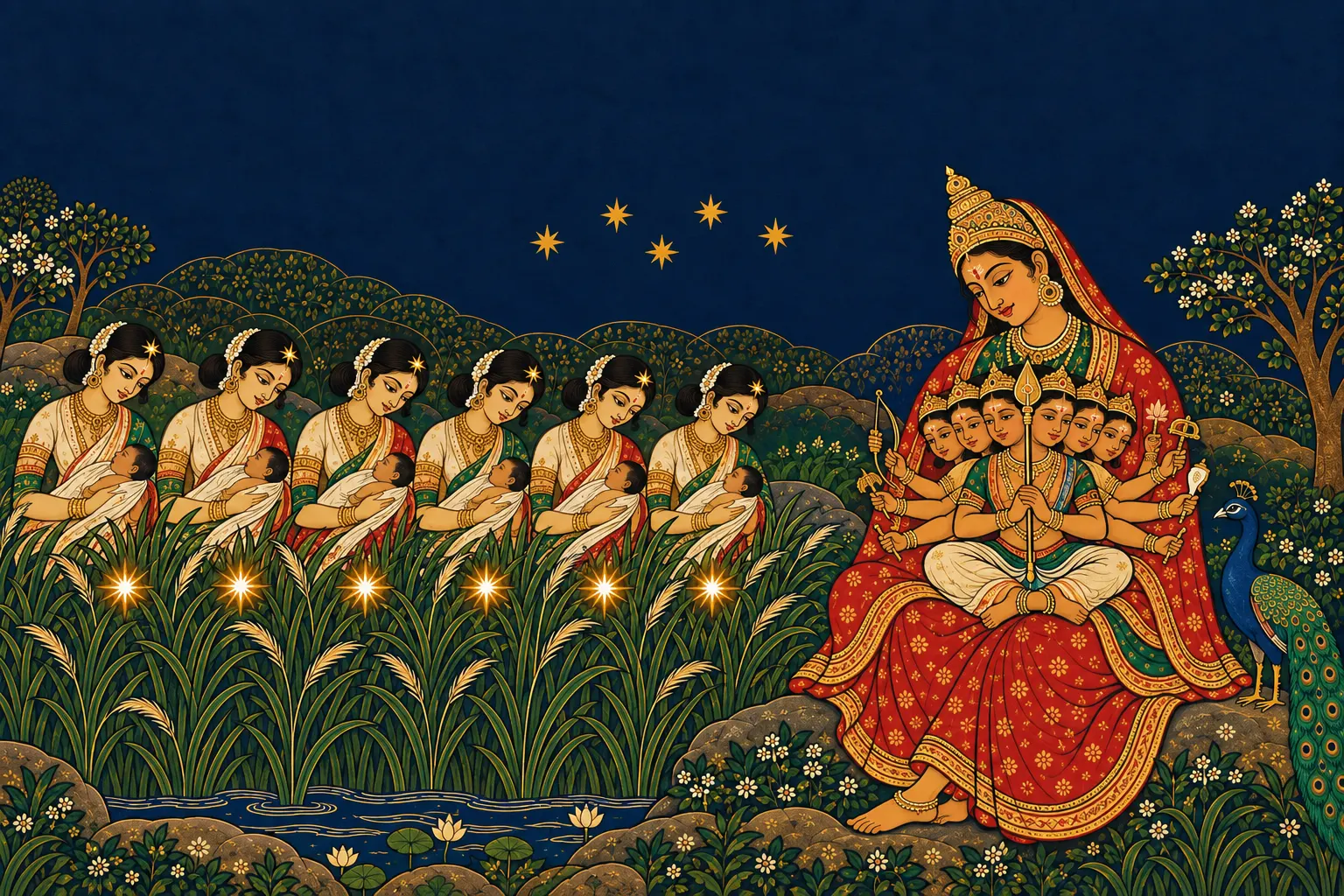
Six sparks, six Krittikas — six stars in the sky — and from them one child with six faces
Split into six
The seed set in the reed-forest split into six parts — six sparks, six infants.
They were found and suckled by the six Krittikas.
The Krittikas are a cluster of stars — today called the Pleiades, and in Indian tradition the asterism Krittika. In the oldest Vedic star-lists the year began at Krittika.
Joined into one
Parvati took all six infants to her lap at once — and they fused into one child, with six heads and twelve arms.
(In other texts he is one child who grows six heads so he can nurse from all six mothers at once.)
Shanmukha. Shadanana. In Tamil, Arumugam — the six-faced.
The name
The Mahabharata itself says: "because he was born of the Krittikas and reared by them, he came to be known through the three worlds as Kartikeya."
The wives whom the Seven Sages had cast out on suspicion were themselves, in one story, set in the sky as stars. That star-cluster is the six mothers.
Note: The Krittikas are the Pleiades cluster (the asterism Krittika). In the oldest Vedic reckoning the year began at Krittika — one reason the asterism, and the name "Kartikeya", carry such weight. The image of the six-faced child is old and widespread, but the mechanism varies. The six infants being fused by Parvati is especially prominent in the southern / Kanda-Puranam tradition; other Sanskrit tellings have one child become six-faced so that he can nurse from all six Krittikas, while still others join or develop six embryos differently. The Mahabharata gives the etymology of "Kartikeya" itself. The episode of the Seven Sages casting out their wives on suspicion is in the text; the epic keeps it without moralising mid-scene.
Source: from several texts and traditions, Six Krittikas