
Parva 13
Anushasana Parva
Bhishma, still on the arrows, finishes what he has to say
The teaching on giving
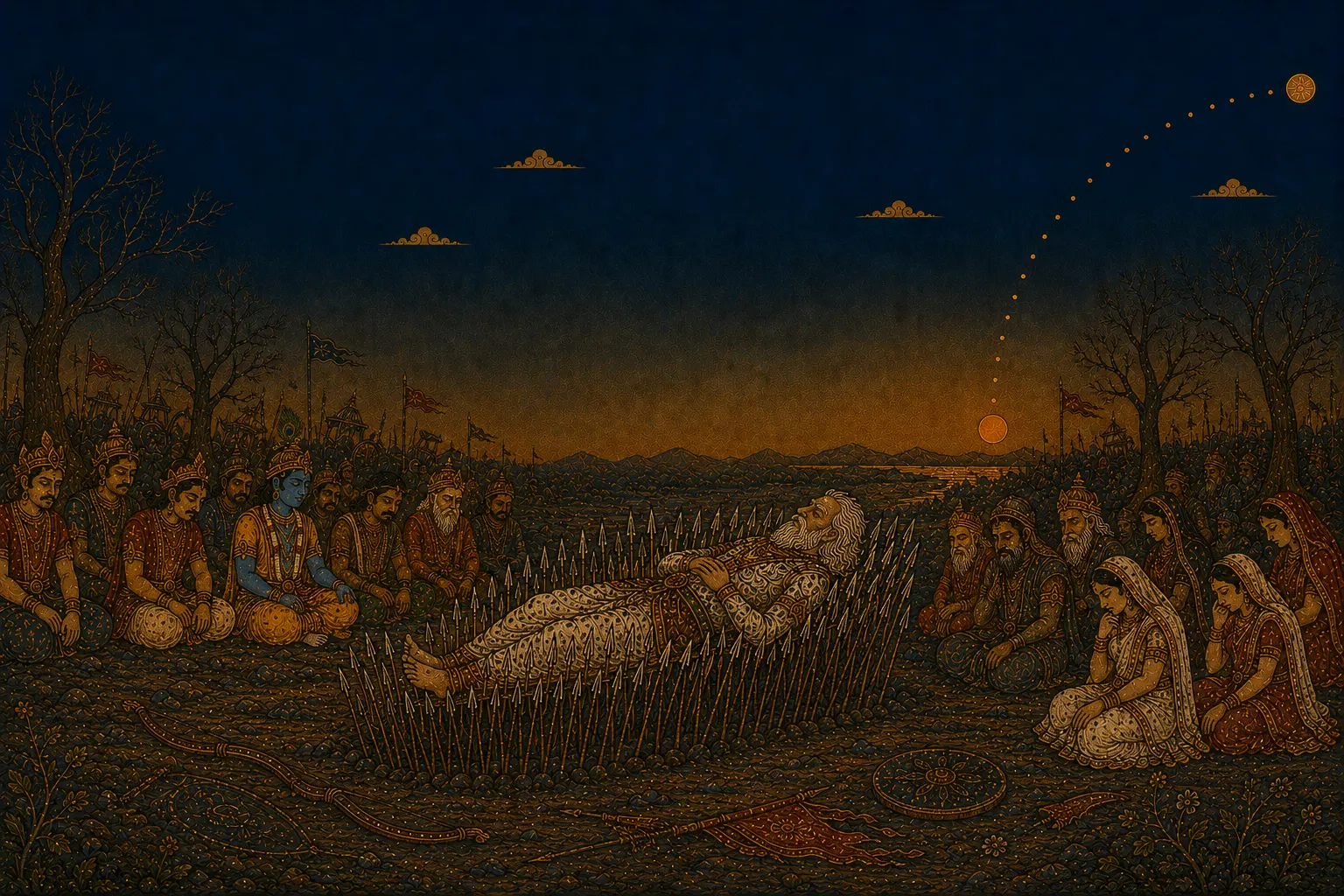
This parva continues from where the last one stopped. The same field, the same bed of arrows, the same two men, one asking, one answering. Most of it concerns giving, which gift, to whom, when, and why, and with what state of mind a gift becomes a true gift.
The story of Bhangashvana
A strange tale appears here. King Bhangashvana performed a great sacrifice, which angered Indra and left him waiting for a chance. One day the king went hunting, lost his way, grew thirsty, and stepped into a lake. When he came out, he was a woman. As a man he had had a hundred sons, now as a woman he bore a hundred sons as well. Indra set the two groups against each other, and they killed one another in battle. Finally Indra appeared and offered the king the chance to become a man again. He refused. Asked why, he gave two reasons, first, that he felt more attachment to the children he had borne as a woman, and second, that the pleasure of union he had known as a woman had not existed for him as a man. The text records this without comment.
The Vishnu Sahasranama
In this same parva Yudhishthira asks what the greatest refuge is. Bhishma answers with the thousand names of Vishnu. This is the Vishnusahasranama. It is not a separate text from the Mahabharata, it sits inside the Anushasana Parva, within this same conversation, and printing it separately for daily recitation came from a later devotional tradition.
Bhishma waits for the northern course
At last the sun turned north. Bhishma finished his teaching. Then he took his leave, and gave up his body. He had held on until then because his father's boon had given him the power to choose the hour of his own death. The son of Ganga, who never married, who never took a kingdom, and who fought to the very end for the same Hastinapura he had wanted to protect, departed that day.
Note: The teaching on giving, the story of Bhangashvana, the Vishnu Sahasranama and Bhishma leaving his body as the sun turned north are all in the Anushasana Parva of Vyasa's Mahabharata. The Vishnu Sahasranama is inside this book — it is not a separate text; its life on its own came from the later devotional tradition, exactly as with the Gita.
Source: Mahabharata (ascribed by tradition to Vyasa), Anushasana Parva