
Chapter 16
The Kali Yuga
This chapter is not of a story but of a time — and the time sounds familiar
Four ages
The Puranas divide time into four great ages: Satya, Treta, Dvapara and Kali.
Each is shorter than the one before it, and each is described as losing something the previous age possessed more fully.
Kali is the fourth and shortest of the four — and, by the traditional reckoning of these texts, the age in which we now live.
What goes on being lost
The Vishnu Purana does not describe it primarily through fire, flood or cosmic disaster.
Instead, it describes the erosion of ordinary life.
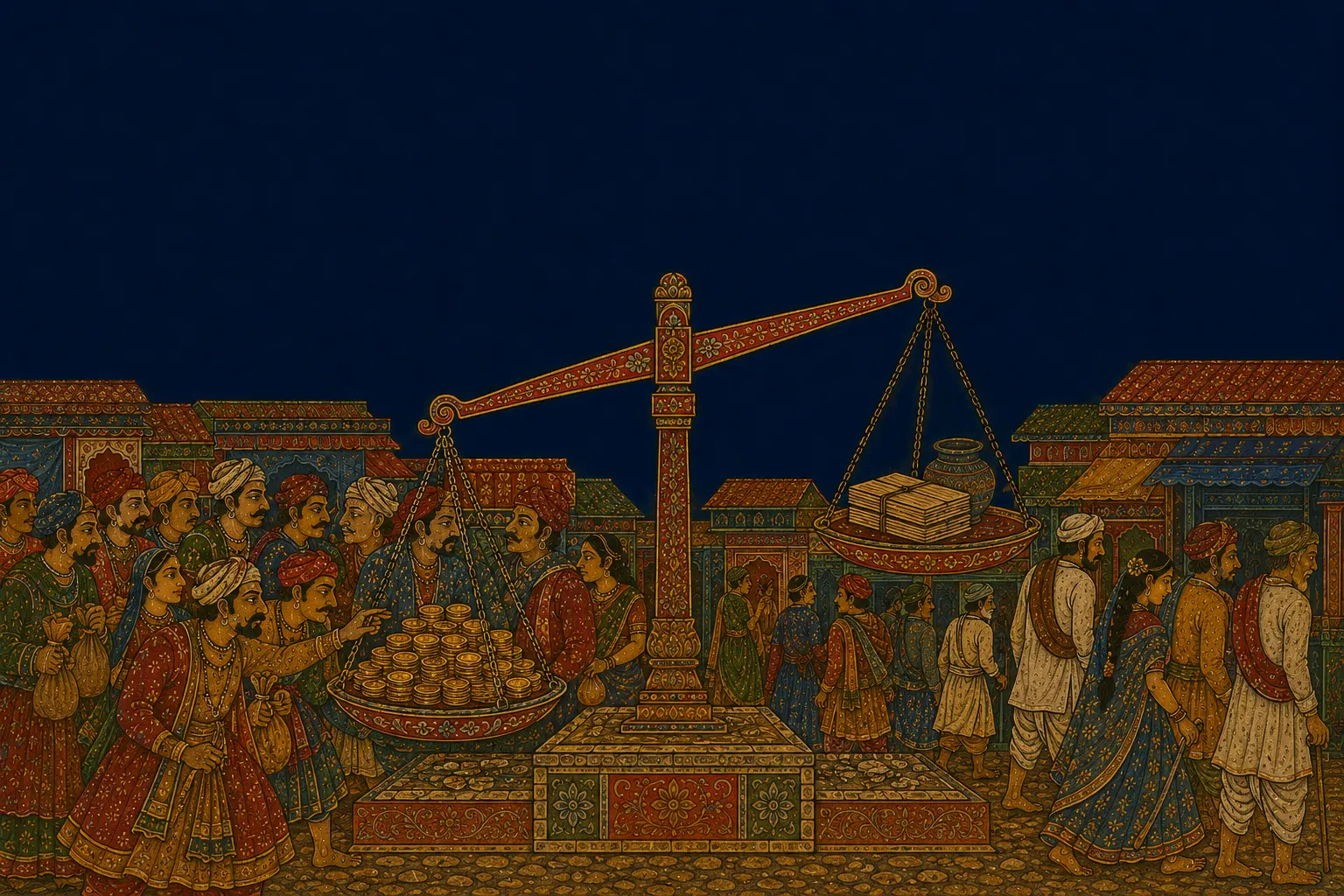
Wealth will be mistaken for worth. The richer person will be assumed to be right.
Display will matter more than substance.
Promises will carry little weight.
Learning and wisdom will be confused with one another.
And one more thing, less often said
But the same tradition includes another point that is often left out.
Kali Yuga is also presented as an age in which spiritual progress can come through simpler means than in earlier ages.
What once required long austerity, elaborate sacrifice and years of discipline may now be approached through something as simple as the repetition of a divine name.
So the description is not only one of decline. It also contains a remarkable consolation.
And then
At the end of the age comes the future described in the Kalki chapter: Shambhala, the horse, the sword, and the closing of the Kali Yuga. Then Satya Yuga returns and the cycle begins again.
The first chapter of this gatha dealt with renewal after a deluge. The final chapter deals with renewal after the end of an age.
The events are different. The pattern is the same.
Note: The description of the Kali Yuga is found in the Vishnu Purana (sixth amsha) and the Bhagavata Purana (twelfth skandha), and while their tone is alike the things listed are not exactly the same. What is worth noticing is that the description is not only severe — it is also said of this same age that the most can be had from the least, and this part is often dropped in the retelling. The description is very old and has felt like their own time to people in every century, which is the most important thing to hold on to while reading it.
Source: from several texts, The Kali Yuga