
Chapter 7
Rama
The avatar who, through his whole story, never knew he was one
A boon that got in the way again
Ravana had tried to protect himself the same way Hiranyakashipu once had: by naming every kind of being he believed might kill him.
Not a deva. Not an asura. Not a gandharva, yaksha or naga. But he did not include human beings — they seemed too insignificant to fear. Nor did he account for vanaras.
The devas appealed to Brahma and then to Vishnu.
This time there would be no fish, no boar, no half-man and half-lion. Vishnu would be born fully human.
Which is why, as a man
In Ayodhya, King Dasharatha was performing a sacrifice for sons.
Into that opening came four princes, the eldest of them Rama.
And Rama is unlike the earlier avatars in one striking way.
Within the Ramayana, he does not move through the story announcing himself as Vishnu.
What he never said himself
He grieves in exile. He weeps when Sita is taken.
He searches the forest and questions the trees.
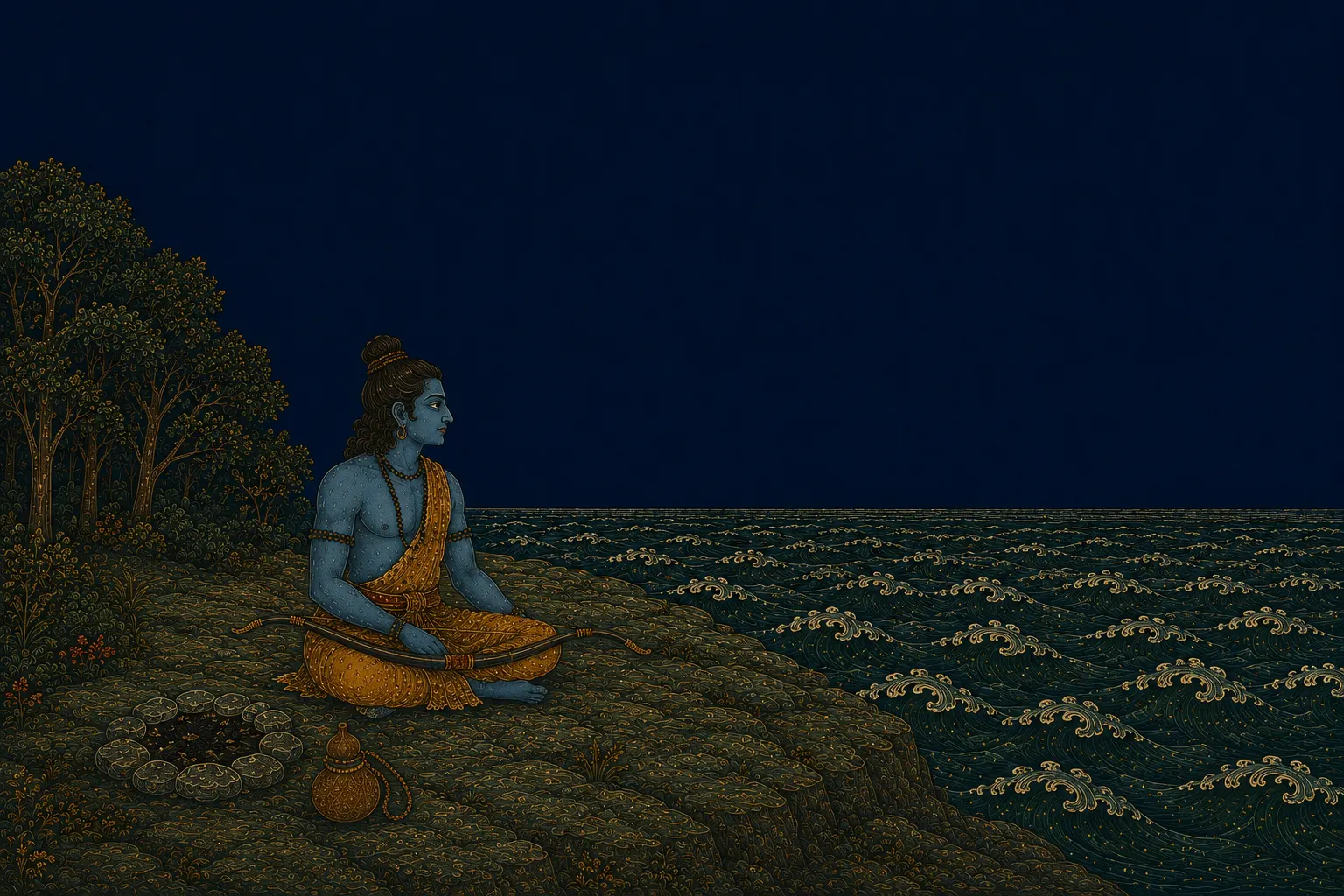
He loses his temper. He waits for three days beside the sea.
The gods, the sages and the audience may know more. But inside the human story, Rama lives through events as a man.
And at the end
In the end, Ravana is killed by the very category of being he had dismissed when asking for protection.
The boon does not fail because its conditions are broken. It fails because something was left outside them — just as in the Narasimha story.
Rama's full life is not retold here. It belongs to the Ramayana itself, from beginning to end.
Note: Rama is counted seventh among the ten avatars, and his whole story is on this site separately in the Ramayana — so this chapter does not repeat it, and only says why this avatar happened. What is worth noticing is that in the middle kandas of the Valmiki Ramayana Rama moves mostly as a man, and the declaration of his being Vishnu is loudest in the Bala Kanda and the Uttara Kanda, which textual tradition has long treated as later additions. That men and vanaras were left out of Ravana's boon is plainly recorded in the Ramayana.
Source: from several texts, Rama